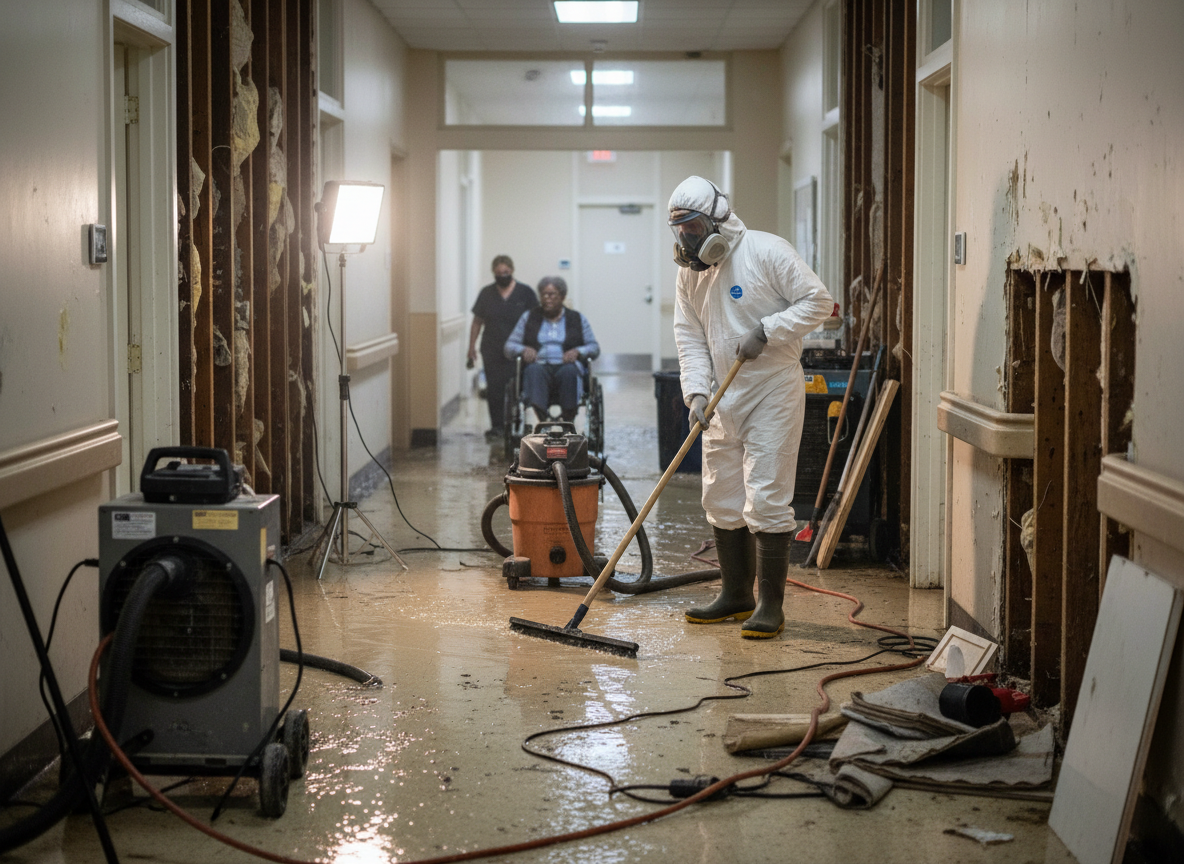
Garden District properties sit on higher ground than much of New Orleans yet still battle persistent moisture from the humid subtropical climate and frequent hurricane remnants. Large Greek Revival and Italianate homes along St. Charles Avenue and Magazine Street often feature original plaster walls, raised foundations, and dense live oak canopy that traps humidity. After heavy rains or tropical systems, water can enter through aging roof flashings and window casings, feeding hidden mold colonies behind baseboards and in attic insulation.
Our crews reach these blocks via Prytania Street or Washington Avenue and work around the narrow driveways and mature landscaping that limit equipment access. We focus on source removal in crawlspaces and behind ornate millwork without damaging the historic fabric that defines the neighborhood. Because many residences predate modern vapor barriers, we adapt containment and drying techniques to the thick brick piers and raised wooden floors common here.
Residents near Lafayette Cemetery No. 1 and Commander's Palace know that even minor leaks can spread quickly through shared walls in double-gallery houses. We schedule around the area's strict permit rules for exterior work and coordinate with homeowners to protect the live oaks and brick sidewalks during equipment movement.
Around Garden District
We regularly work near:
- 📍Lafayette Cemetery No. 1
- 📍St. Charles Avenue
- 📍Magazine Street
- 📍Commander's Palace
- 📍The Rink
- 📍Washington Avenue
Mold Removal in Garden District — Local Notes
- •Garden District homes built before 1900 often have plaster on wood lath that holds moisture longer than modern drywall, requiring slower, gentler drying to avoid cracking.
- •Mature oak root systems and low curbs along many streets slow drainage after storms, pushing water toward foundations on the blocks between Jackson and Louisiana Avenues.
- •Narrow side setbacks and carriage-house garages restrict large dehumidifier placement, so we stage equipment on the neutral ground along St. Charles Avenue when needed.
- •Post-hurricane wind-driven rain commonly enters through the tall double-hung windows typical of the district, creating mold lines at the second-floor ceiling joists.