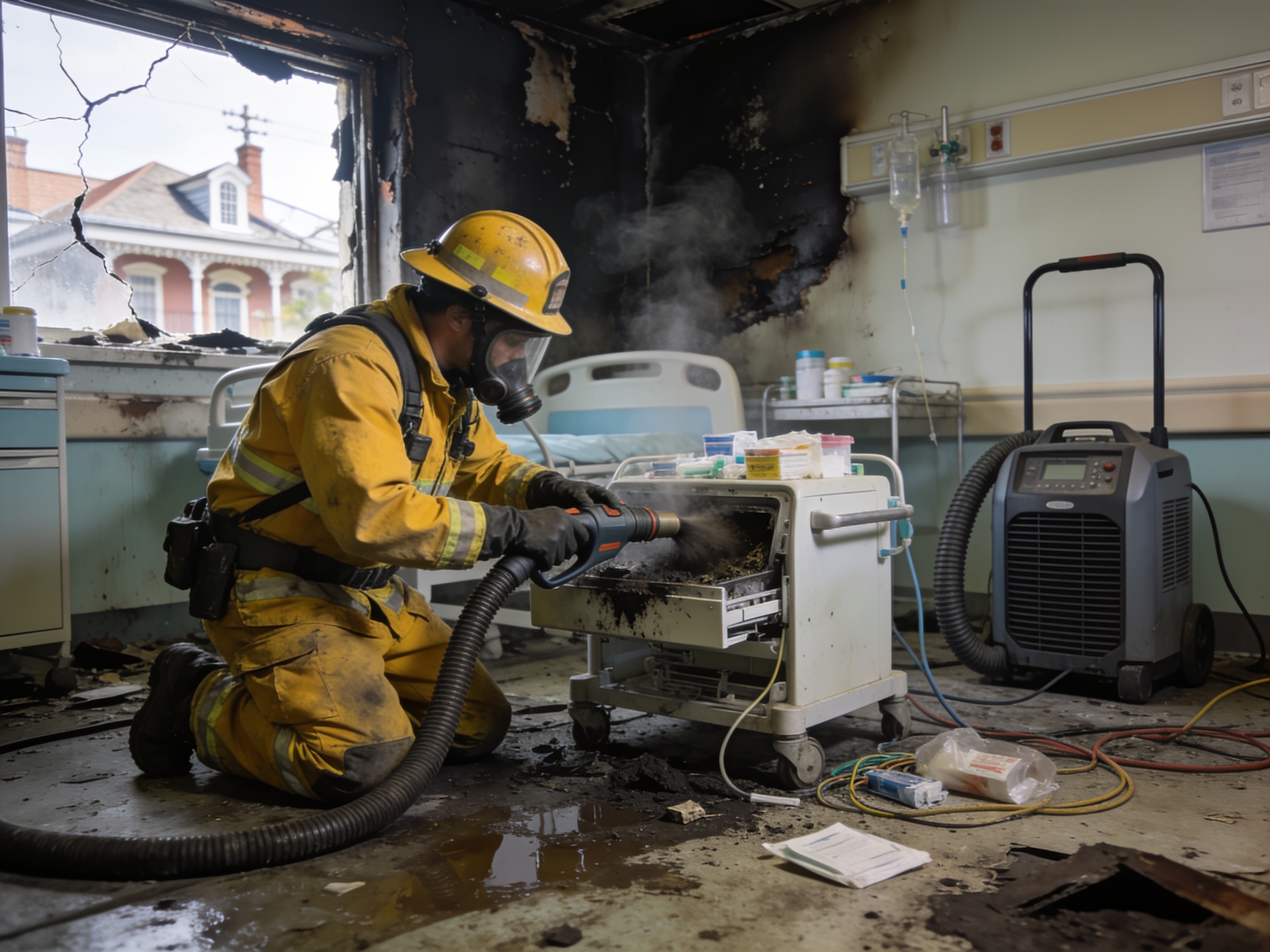
New Orleans healthcare buildings in neighborhoods like Mid-City and Uptown often feature older construction with plaster walls and tight mechanical spaces that trap soot after a fire. High humidity in Orleans Parish accelerates corrosion on medical equipment and HVAC components if residue is not removed within days. Restoration crews must isolate zones quickly to avoid spreading particles into patient areas while complying with strict infection-control standards that differ from standard commercial jobs.
Hurricane season adds pressure because power outages and flooding can compound fire damage in facilities near City Park or Lakeview. Crews frequently encounter water intrusion mixed with smoke residue, creating conditions where mold colonies establish on insulation and ceiling tiles within 48 hours. Containment barriers and negative air machines become essential to protect sterile environments during cleanup.
Algiers and Gentilly clinics sit on lower ground where soil moisture lingers, making subfloor drying after suppression water more difficult. Technicians test for hidden moisture behind walls using meters calibrated for local conditions rather than relying on visual checks alone. This step prevents repeat issues once humidity returns to normal levels.
Restoration teams coordinate with facility engineers to schedule work around patient schedules, often working overnight shifts in the French Quarter or Garden District locations where access is limited by narrow streets and historic protections.
Technician insight
In New Orleans the thing that catches most people out with Healthcare Fire Damage Restoration is how quickly humidity turns leftover suppression water into mold inside older plaster walls, especially in buildings near the French Quarter or Treme where airflow is already restricted.
Mid-City Clinic Smoke Event
A small fire in an electrical panel spread soot through the HVAC of a Mid-City medical clinic. Inspection showed residue inside ducts and elevated moisture in ceiling tiles from sprinkler activation. Crews installed containment, cleaned the system, and ran dehumidifiers until readings stabilized, allowing the clinic to reopen without mold issues.
Healthcare Fire Damage Restoration Services We Offer
✓Soot and Smoke Removal in Clinics
Targeted cleaning of porous and non-porous surfaces in medical offices to eliminate odor and residue without disrupting operations.
✓Hvac Decontamination After Fire
Inspection and cleaning of ductwork in healthcare buildings to stop smoke particles from recirculating into treatment rooms.
✓Moisture Mapping and Drying
Use of meters and dehumidifiers to locate hidden water from suppression efforts before mold develops in humid conditions.
✓Medical Equipment Cleaning
Careful removal of corrosive soot from diagnostic machines and monitors while following manufacturer guidelines.
✓Containment and Negative Air Setup
Installation of barriers and air filtration to keep restoration dust and odors away from patient and sterile zones.
Healthcare Fire Damage Restoration Cost in New Orleans, LA
| Service | Typical Range | What Affects It |
|---|---|---|
| Initial Assessment And Testing | $600–$1,200 | Larger facilities or multiple floors increase the range. |
| Containment And Air Filtration | $800–$2,500 | Depends on number of zones needing isolation. |
| Soot Removal Per Treatment Room | $400–$900 | Varies with surface types and equipment present. |
| Hvac Cleaning | $1,200–$3,000 | Higher when ducts run through multiple stories. |
Ranges are typical for New Orleans, LA and confirmed with an exact written quote before any work starts.
How it works
- 1
Site Assessment
Technicians inspect affected zones in the healthcare facility, document soot depth, and test for hidden moisture using local humidity data.
- 2
Containment Installation
Barriers and negative air machines are placed to isolate the work area from the rest of the building.
- 3
Residue Removal
Specialized equipment extracts soot from surfaces, ducts, and equipment without spreading particles.
- 4
Drying And Monitoring
Dehumidifiers run until moisture readings meet standards, with daily checks to prevent secondary mold.
- 5
Final Clearance
Air quality and surface tests confirm the space meets healthcare occupancy requirements before reopening.
Pricing
Costs depend on the size of the affected healthcare space, extent of smoke migration, and whether water from suppression mixes with soot.