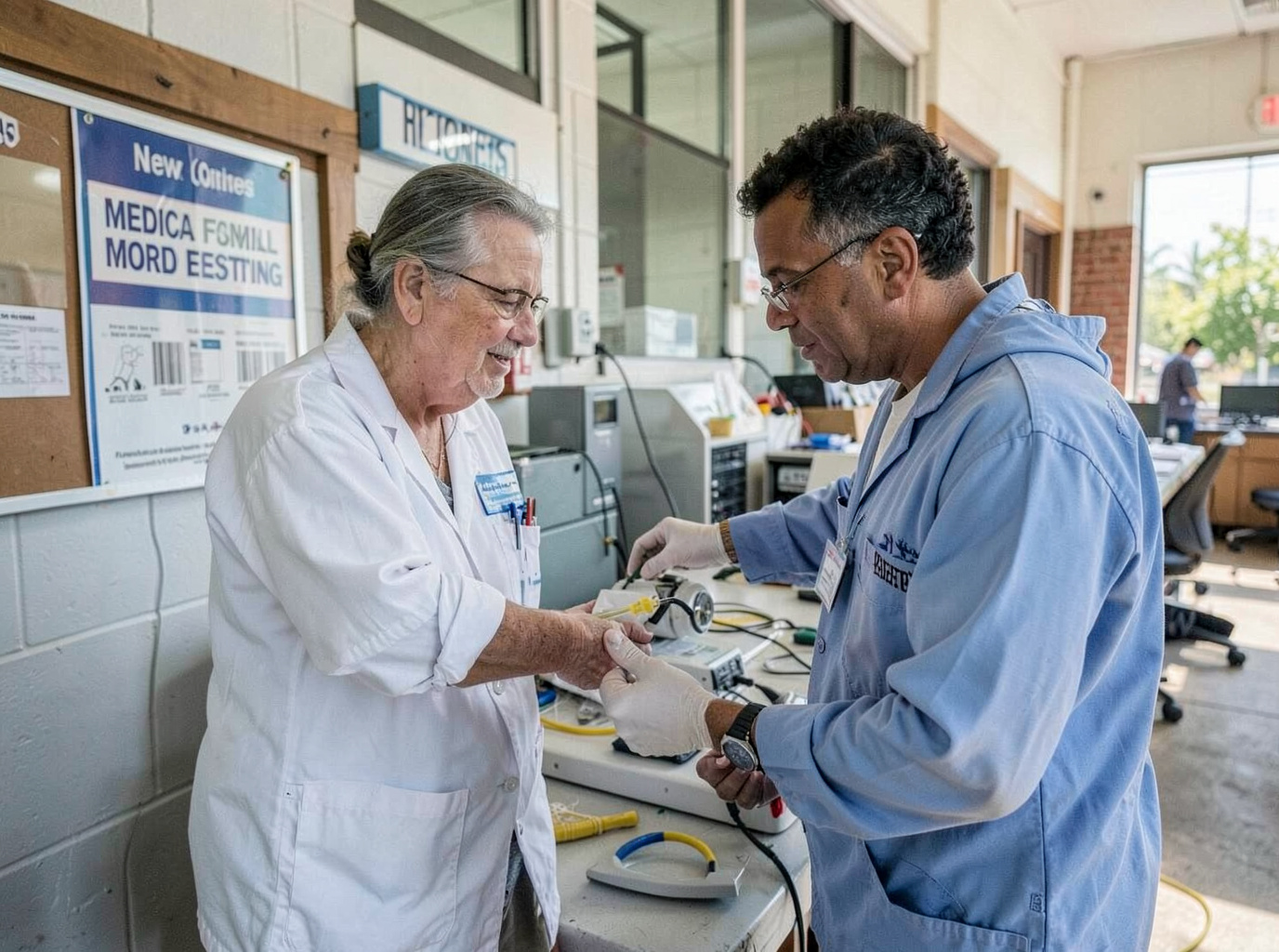
Medical facilities in Orleans Parish face constant moisture pressure from the humid subtropical climate and repeated hurricane seasons that drive water into older masonry and plaster structures common in the Garden District and Treme. HVAC systems in buildings near City Park or the Mercedes-Benz Superdome often run continuously, creating condensation points behind walls and above dropped ceilings where mold can develop without visible signs. Testing must account for patient areas that cannot be taken offline easily, requiring negative-pressure containment planning and rapid sampling methods that do not disrupt clinical operations.
Facilities in Uptown and Mid-City frequently occupy structures built before modern vapor barriers, so moisture from street flooding or roof leaks travels laterally through brick and lathe. Air sampling alone misses hidden growth in these assemblies, which is why surface and wall-cavity samples are paired with moisture mapping using meters calibrated for high-humidity environments. Post-storm events that affect Algiers and Gentilly often leave residual dampness in slab-on-grade medical suites, demanding targeted testing along expansion joints and under cabinetry.
Regulatory expectations for medical settings in New Orleans require documentation that supports infection-control standards, especially when results may be reviewed by parish health officials. Sampling locations are chosen to cover high-traffic zones, sterile storage rooms, and mechanical chases that serve multiple departments. Reports include chain-of-custody records and recommendations tied directly to the building’s age and construction type rather than generic thresholds.
Technician insight
In New Orleans, the thing that catches most people out with Medical Facility Mold Testing is how hurricane-driven moisture travels laterally through the brick and plaster of buildings in the Garden District and Treme, bypassing standard air sampling and requiring wall-cavity checks that many facilities skip until symptoms appear in staff or patients.
Mid-City Clinic After Tropical Storm
A medical clinic in Mid-City reported musty odors in exam rooms following heavy rains. Wall probes revealed elevated moisture behind original plaster where water had wicked from the street side. Targeted cavity samples confirmed hidden growth; clearance testing after targeted drying confirmed levels returned to background.
Medical Facility Mold Testing Services We Offer
✓Hospital Wing Mold Inspection
Room-by-room spore and moisture assessment in patient corridors and nurse stations of larger medical campuses serving New Orleans.
✓Clinic HVAC Mold Assessment
Duct and coil sampling plus supply-air testing for outpatient clinics in Mid-City and Lakeview where continuous cooling promotes condensation.
✓Emergency Department Sampling
Rapid surface and air testing in high-traffic trauma and triage areas that must remain operational during Orleans Parish storm seasons.
✓Medical Equipment Storage Testing
Targeted checks inside sterile supply rooms and imaging suites where humidity from nearby French Quarter and Bywater buildings can migrate inward.
✓Post-Flood Medical Facility Clearance
Verification sampling after hurricane-related water events that impact facilities near the Superdome or in Gentilly and Algiers.
Medical Facility Mold Testing Cost in New Orleans, LA
| Service | Typical Range | What Affects It |
|---|---|---|
| Single Department Testing | $450–$850 | Higher in pre-1920 structures found in the Garden District and Treme. |
| Full Floor Assessment | $1,200–$2,400 | Includes HVAC trunk lines; increases after hurricane flooding in Gentilly or Algiers. |
| Emergency Response Sampling | $600–$1,100 | Same-day mobilization for clinics near the Superdome or French Quarter. |
Ranges are typical for New Orleans, LA and confirmed with an exact written quote before any work starts.
How it works
- 1
Site Walk and Risk Mapping
Technicians review mechanical plans and walk every affected zone, noting HVAC layout, past leak locations, and construction type common to New Orleans medical buildings.
- 2
Targeted Sampling
Air, surface, and wall-cavity samples are collected using medical-grade protocols that respect infection-control zones and patient schedules.
- 3
Laboratory Analysis
Samples are sent for genus-level identification with emphasis on species that thrive in the region’s persistent humidity.
- 4
Report and Action Plan
Findings are delivered with location-specific recommendations that reference the building’s age and exposure to hurricane-driven moisture.
Pricing
Cost depends on square footage, number of test sites, and whether post-storm access is required.