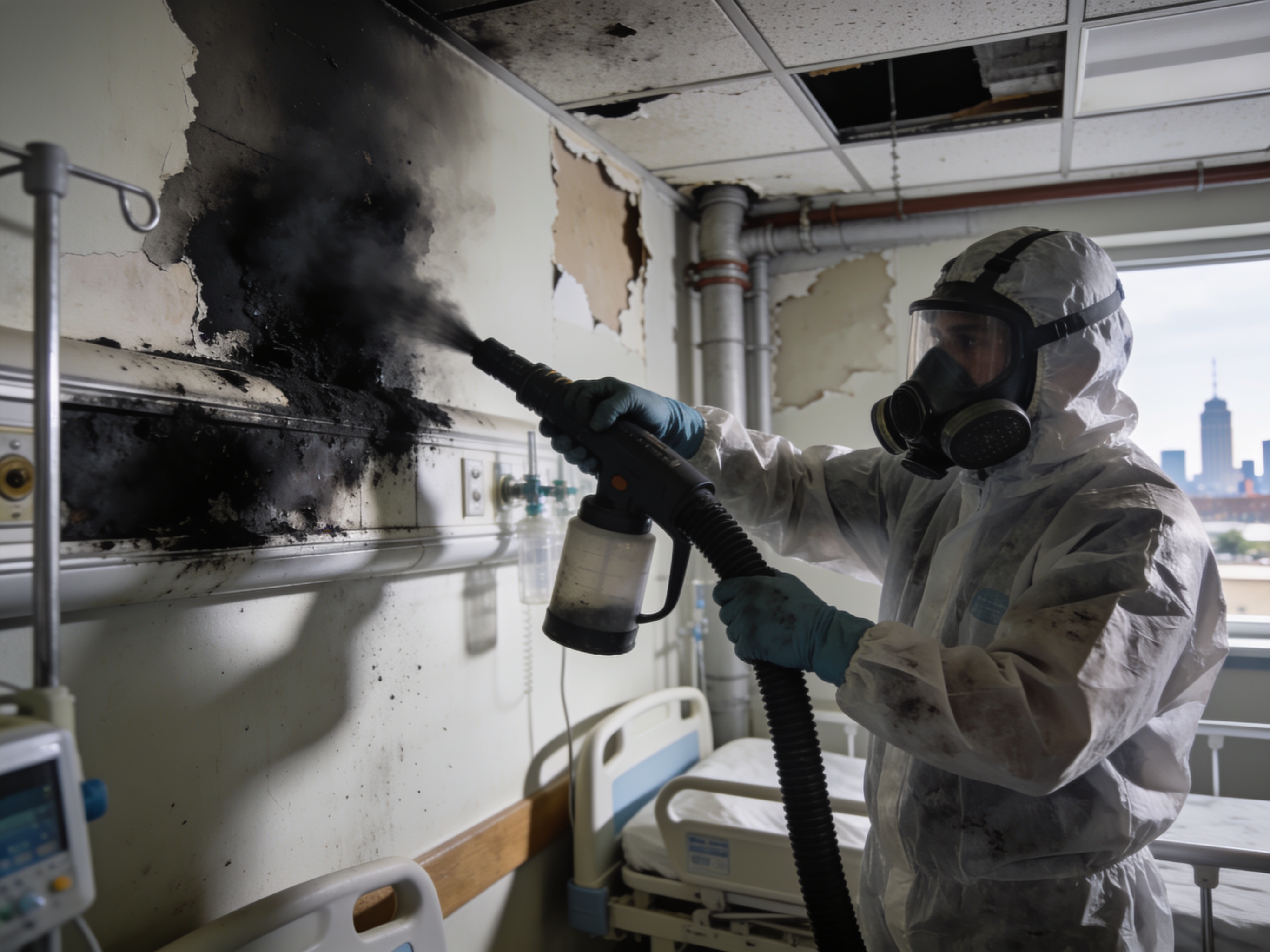
New Orleans humidity accelerates soot bonding to porous surfaces like plaster walls and terrazzo floors common in older Uptown and Garden District hospitals. After a fire event, technicians must first isolate HVAC zones to prevent redistribution through shared ductwork that often runs between patient wings and older mechanical rooms. Failure to map these paths early leads to repeated odor complaints weeks later when seasonal rains raise indoor moisture levels.
In areas like the French Quarter and Treme, hospitals sit near historic structures with limited access points, requiring negative air machines positioned on side streets without blocking emergency vehicle routes. Soot from electrical fires mixes with salt air from nearby Lake Pontchartrain, creating acidic residues that etch stainless steel equipment if not neutralized within the first 48 hours. Crews test pH levels on every surface before applying encapsulants rated for medical environments.
Hurricane season adds complexity because power fluctuations can trigger small fires in backup generators housed in Gentilly and Algiers facilities. Post-event cleanup must coordinate with parish health inspectors who require documentation of particle counts below 0.3 microns before reoccupying surgical suites. Teams use portable HEPA units sized for 10,000-square-foot zones typical in Mid-City medical buildings.
Nearby cities such as Metairie and Harvey see similar jobs in facilities with slab-on-grade construction where soot migrates into expansion joints during flooding. Local operators know to pull baseboards early rather than relying on surface cleaning alone.
Technician insight
In New Orleans, the thing that catches most people out with Hospital Smoke and Soot Cleanup is how quickly humidity in the French Quarter and Mid-City turns light soot into bonded residue on plaster and terrazzo. Older hospital buildings lack the modern vapor barriers found in newer Metairie facilities, so crews must pull baseboards and treat subfloor joints or odors return after the next rain. Skipping that step always doubles the return visits.
Mid-City hospital generator room after storm outage
A small electrical fire in the backup generator left soot throughout the mechanical room and adjacent corridor. Inspection showed acidic residue migrating into floor joints due to recent high humidity. Technicians isolated the zone, extracted soot from ducts, neutralized surfaces, and completed clearance testing before the next shift.
Hospital Smoke and Soot Cleanup Services We Offer
✓HVAC Soot Extraction in Surgical Wings
Removes embedded soot from hospital ductwork using HEPA-filtered negative pressure to protect sterile zones from recirculation.
✓Post-Fire Odor Neutralization for Patient Rooms
Applies medical-grade oxidizers to eliminate smoke odors without leaving residues that could affect immunocompromised patients.
✓Soot Removal From Medical Equipment Surfaces
Cleans sensitive monitors and stainless fixtures using pH-neutral agents that prevent corrosion in high-humidity New Orleans conditions.
✓Emergency Generator Room Decontamination
Addresses soot and ash buildup in backup power areas after hurricane-related electrical events common in Orleans Parish.
✓Wall and Ceiling Soot Encapsulation
Seals porous plaster and tile in older hospital corridors to lock in residues before mold growth begins in humid weather.
Hospital Smoke and Soot Cleanup Cost in New Orleans, LA
| Service | Typical Range | What Affects It |
|---|---|---|
| Single patient room soot cleanup | $800–$1,600 | Higher when walls require encapsulation after prolonged humidity exposure. |
| Surgical suite decontamination | $2,500–$4,800 | Includes equipment surface work and clearance testing. |
| HVAC duct soot extraction | $1,200–$3,000 | Depends on number of zones and access in older buildings. |
| Generator room ash removal | $600–$1,200 | Varies with ash volume after electrical events. |
Ranges are typical for New Orleans, LA and confirmed with an exact written quote before any work starts.
How it works
- 1
Site Assessment and Containment
Map affected zones and set up negative air pressure barriers around patient corridors.
- 2
Source Removal and HEPA Filtration
Extract loose soot with specialized vacuums then run continuous filtration to capture airborne particles.
- 3
Surface Cleaning and Neutralization
Apply pH-balanced cleaners to walls, floors, and equipment followed by odor oxidizers.
- 4
Verification and Clearance
Conduct particle testing and coordinate with health inspectors before reopening spaces.
Pricing
Pricing varies by square footage affected and whether HVAC systems require full disassembly.