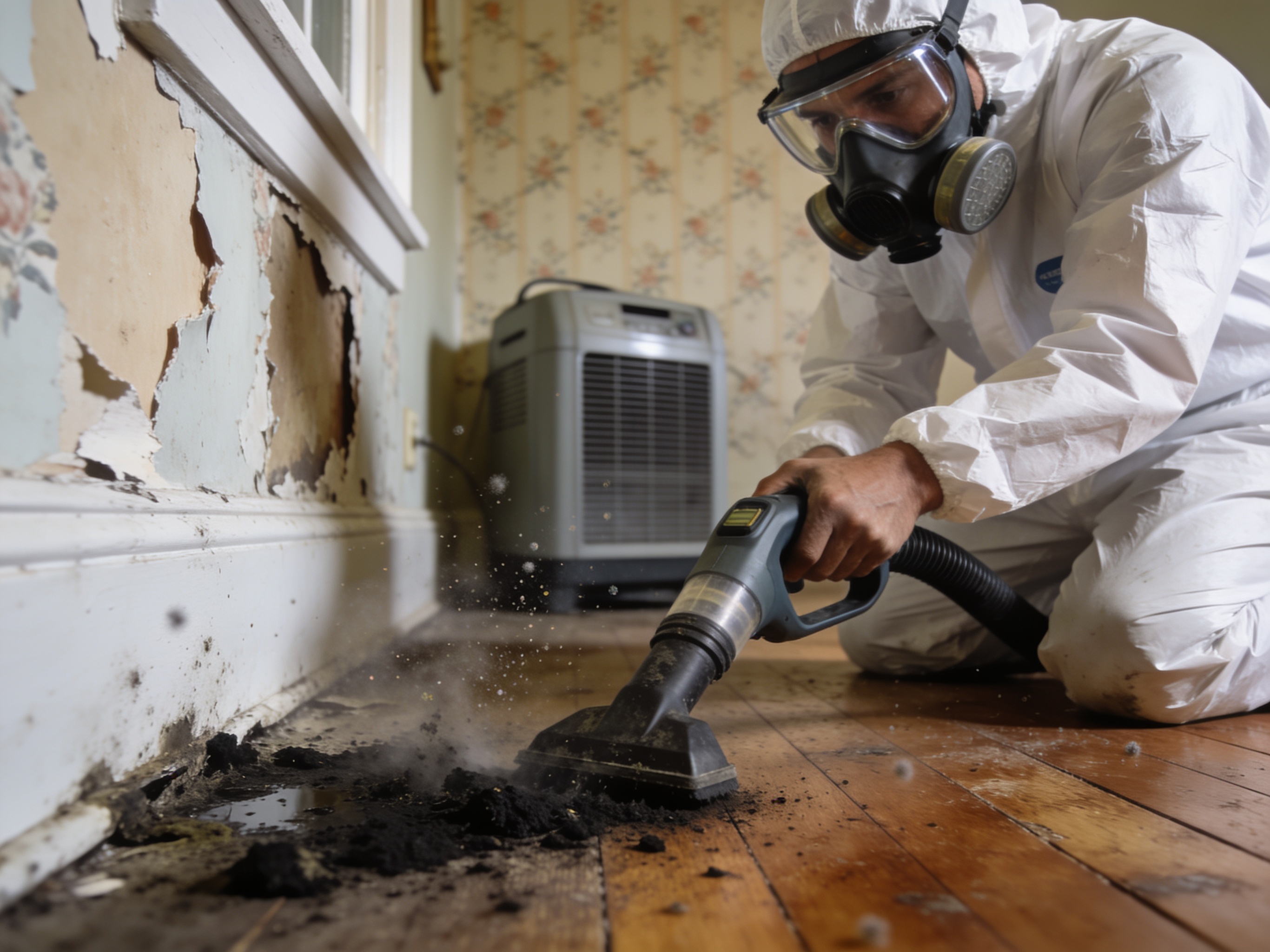
New Orleans homes in neighborhoods like the French Quarter and Marigny often feature older wood framing and plaster walls that trap moisture after roof leaks or rising damp from the Mississippi. Black mold colonies establish quickly in these cavities once relative humidity stays above 60 percent for weeks, which happens routinely between May and October. Technicians must cut access panels without disturbing lead paint common in pre-1940 structures and use negative air machines to keep spores from drifting into occupied spaces.
Hurricanes push floodwater into crawl spaces and slab homes across Gentilly and Algiers, leaving hidden saturation in insulation and subfloors. Black mold then grows on the back side of drywall and under baseboards where homeowners rarely look. Proper remediation requires removing affected materials at least 18 inches past visible growth, followed by HEPA vacuuming and antimicrobial treatment on remaining framing before new insulation is installed.
Lakeview and Mid-City properties sit on low ground where storm drains back up during heavy rain, sending water under pier-and-beam houses. The resulting mold often reaches HVAC ducts and registers, spreading spores through the entire living area. Remediation includes sealing off the system, cleaning coils and plenums, and verifying clearance with air sampling before the unit is returned to service.
Work in the Garden District and Uptown must respect historic district guidelines that limit visible changes to exterior walls and require matching original materials. Containment barriers stay inside whenever possible, and debris is removed through rear or side entrances to avoid street disruption near landmarks such as St. Louis Cathedral and Jackson Square.
Technician insight
In New Orleans the thing that catches most people out with black mold removal is how quickly it spreads through the cavities of 80- to 120-year-old balloon-framed houses once a roof leak or hurricane flood hits. The high water table and frequent humidity spikes mean you often find growth two feet past the visible stain, especially under pier-and-beam floors in Algiers and Mid-City.
Garden District Wall Cavity Job
A homeowner noticed a musty smell near a second-floor window after spring rains. Inspection found black mold behind plaster on two exterior walls where flashing had failed. We removed the affected plaster and insulation, treated the studs, and installed new material matched to the historic interior. Clearance testing passed and the odor did not return.
Black Mold Removal Services We Offer
✓Post-Flood Black Mold Removal
Removes mold that appears after hurricane or heavy rain flooding in crawl spaces and lower levels of Gentilly and Bywater homes.
✓Attic Black Mold Remediation
Addresses mold growth on roof decking and insulation caused by poor ventilation and New Orleans summer humidity.
✓Wall Cavity Mold Extraction
Opens and treats hidden mold behind plaster and drywall in older French Quarter and Treme properties without unnecessary demolition.
✓HVAC System Mold Cleaning
Cleans black mold from ducts, coils, and registers that spread spores through homes in Lakeview after moisture events.
✓Crawl Space Mold Treatment
Treats mold under pier-and-beam houses common in Algiers and Mid-City where standing water collects after storms.
Black Mold Removal Cost in New Orleans, LA
| Service | Typical Range | What Affects It |
|---|---|---|
| Initial inspection and moisture mapping | $250–$450 | Larger homes in Uptown or multi-story French Quarter properties cost more. |
| Small contained removal (under 10 sq ft) | $600–$1,200 | Single wall or ceiling area after minor leak. |
| Whole-room or crawl space remediation | $1,800–$4,500 | Includes HVAC cleaning when ducts are involved. |
| Post-hurricane attic and wall package | $3,200–$7,000 | Common after storms affecting Lakeview or Gentilly homes. |
Ranges are typical for New Orleans, LA and confirmed with an exact written quote before any work starts.
How it works
- 1
Site Assessment
Inspect affected rooms, measure moisture in framing and drywall, and map visible and hidden growth using moisture meters and borescopes.
- 2
Containment Setup
Install plastic barriers and negative air machines to isolate the work zone from the rest of the New Orleans home.
- 3
Material Removal
Cut out and bag moldy drywall, insulation, and wood while keeping dust contained for disposal outside the structure.
- 4
Cleaning and Drying
HEPA vacuum surfaces, apply antimicrobial solutions, and run dehumidifiers until wood moisture content drops below 12 percent.
- 5
Clearance Testing
Perform air and surface sampling to confirm mold levels meet post-remediation standards before barriers come down.
Pricing
Pricing varies with home age, extent of hidden growth, and whether HVAC or crawl space work is required.