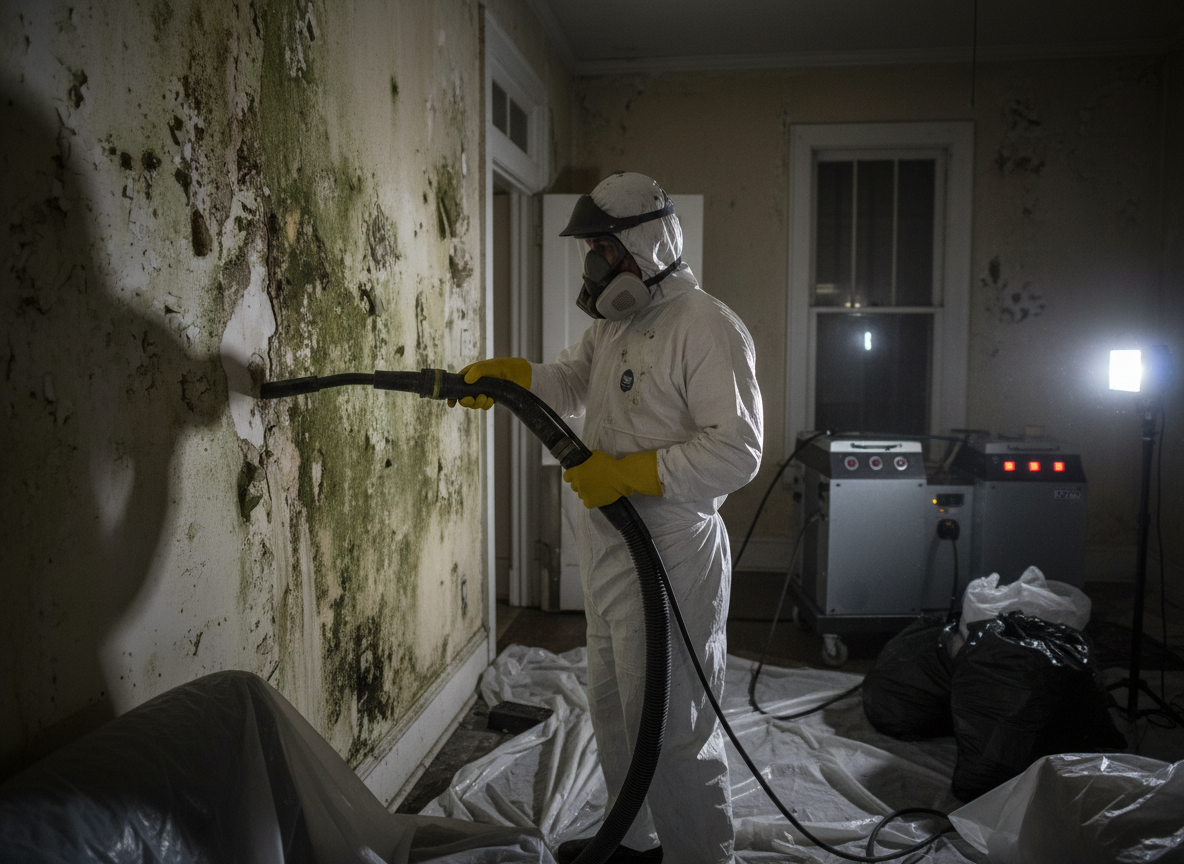
New Orleans homes in neighborhoods such as the Marigny, Treme, and Uptown often feature older wood-frame construction with limited ventilation, which allows moisture from the humid subtropical climate to linger in attics and crawl spaces. Frequent hurricanes bring heavy rainfall that can infiltrate roofs and walls, creating hidden growth behind plaster and in HVAC systems common in Lakeview and Gentilly properties. Technicians must account for Orleans Parish building codes that require containment barriers during removal to prevent spore spread to adjacent rooms.
In areas like Algiers and Mid-City, raised foundations help with flooding but still leave under-floor insulation vulnerable after storms. Mold remediation here involves targeted removal from joists and ductwork rather than full demolition when possible. Crews use negative air machines calibrated for the tight layouts typical of Garden District shotgun houses, where airflow patterns differ from newer builds in Metairie or Harvey.
Seasonal patterns matter: once winter temperatures drop after hurricane season, condensation increases on cooler surfaces in unconditioned spaces. This shifts the approach for properties near City Park or Jackson Square, where proximity to the river adds ambient moisture that standard drying methods must address over several days.
Technician insight
In New Orleans, the thing that catches most people out with Residential Mold Removal is how quickly hurricane-driven moisture travels through the shared walls of shotgun houses in the Marigny and Treme, turning a small roof leak into widespread growth before homeowners notice.
Garden District Attic Growth After Storm
A homeowner in the Garden District noticed musty odors after a hurricane. Inspection revealed water tracking along rafters into insulation. Crews contained the attic, removed saturated materials, and dried the space over several days. Growth was eliminated without affecting living areas below.
Residential Mold Removal Services We Offer
✓Attic Mold Remediation
Removes growth from rafters and insulation in older New Orleans attics exposed to roof leaks during hurricanes.
✓Crawl Space Mold Treatment
Addresses moisture trapped under raised homes in neighborhoods like Bywater and Gentilly after heavy rains.
✓HVAC Duct Mold Removal
Cleans and treats ductwork in central air systems common in Uptown and Lakeview residences.
✓Wall Cavity Mold Extraction
Targets hidden growth behind plaster in French Quarter and Marigny homes without unnecessary demolition.
✓Post-Hurricane Mold Assessment
Evaluates storm damage in Orleans Parish properties near the Superdome and Audubon Zoo areas.
Residential Mold Removal Cost in New Orleans, LA
| Service | Typical Range | What Affects It |
|---|---|---|
| Initial Assessment | $250–$450 | Varies by square footage in French Quarter or Garden District homes. |
| Attic Remediation | $1,200–$2,800 | Depends on insulation type and access in older Uptown properties. |
| Crawl Space Treatment | $900–$2,100 | Influenced by flooding history in Mid-City and Gentilly. |
| HVAC System Cleaning | $600–$1,400 | Higher in homes with extensive ductwork near Lakeview. |
Ranges are typical for New Orleans, LA and confirmed with an exact written quote before any work starts.
How it works
- 1
Site Inspection
Technicians examine affected areas in the specific neighborhood, checking for moisture sources tied to local weather patterns.
- 2
Containment Setup
Barriers and negative air are installed to isolate the work zone, especially important in attached historic structures.
- 3
Removal And Cleaning
Affected materials are removed and surfaces treated, with attention to wood framing typical in New Orleans housing stock.
- 4
Drying And Verification
Dehumidification continues until levels stabilize, followed by testing before barriers come down.
Pricing
Upfront quotes provided after inspection based on property size and extent of growth.