2026-10-13 ·
What Affects Mold Removal Costs in Historic New Orleans Properties
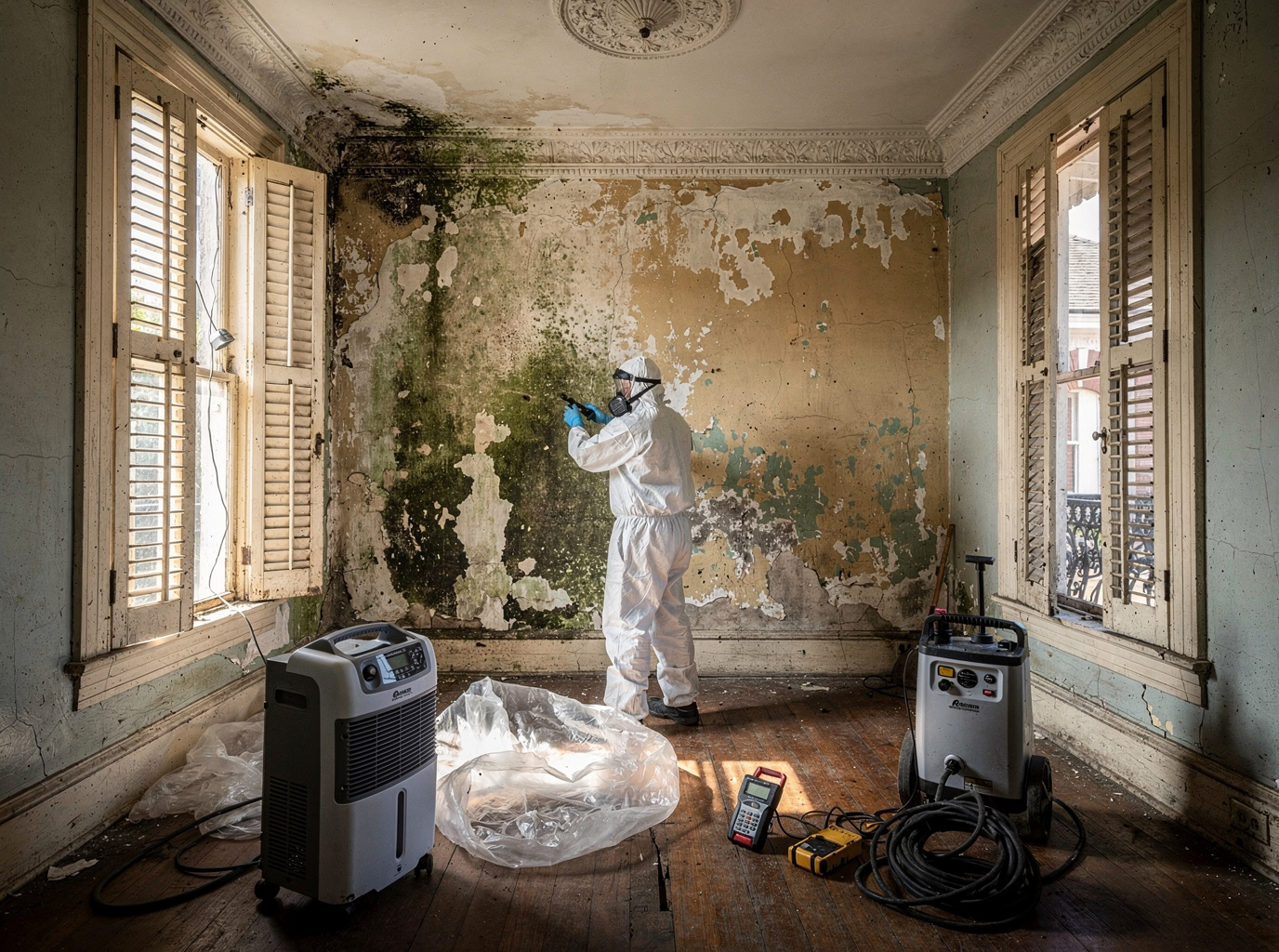
Mold removal costs in historic New Orleans properties typically start around $2,000 and climb past $7,000 when factors like building age, hidden damage behind plaster walls, and post-hurricane moisture combine in Orleans Parish homes.
Age and Construction of Historic Properties
Many homes in the French Quarter and Treme date to the 1800s with cypress framing, plaster-over-lath walls, and raised foundations that trap moisture after leaks. These materials absorb water differently than modern drywall, requiring slower drying times and more selective demolition to preserve original woodwork. In Garden District and Uptown properties, layered renovations from multiple decades often hide moisture pockets between floors that standard inspection tools miss. Mold Remediation crews must map each layer before containment, which adds labor hours compared with newer builds in Metairie or Harvey. The humid subtropical climate accelerates rot in these older assemblies once water enters through roof valleys or window casings common in pre-1920 construction.
Climate, Hurricanes, and Seasonal Moisture Patterns
New Orleans sits in a humid subtropical zone where summer dew points stay above 70 degrees for months, feeding mold on any surface that stays damp longer than 48 hours. Frequent hurricanes push wind-driven rain through shutters and into attics across Lakeview and Gentilly, creating widespread hidden growth that only appears weeks later. Properties near the Mississippi or in low-lying Algiers Point see groundwater seepage that keeps crawl spaces above 60 percent relative humidity year-round. Each storm event multiplies the square footage needing treatment because floodwaters carry spores into wall cavities that dry slowly under the city’s typical 80-plus percent outdoor humidity. Crews therefore budget extra time for dehumidification equipment sized for these persistent conditions rather than one-time leaks.
Neighborhood Access and Structural Variables
Narrow streets and shared walls in the Marigny and Bywater limit equipment staging, forcing smaller containment setups and multiple trips that raise daily rates. In contrast, larger lots in Lakeview allow full exterior access yet still require protection of historic landscaping and brick foundations. French Quarter buildings often sit on slabs with limited ventilation, so crews must route negative air machines through interior hallways without disturbing neighboring businesses. These physical constraints directly affect how long a Mold Removal project runs and whether specialized scaffolding or permits enter the cost calculation.
Hidden Mold Detection and Inspection Scope
After summer storms, moisture can travel along joists for 20 feet or more before visible colonies appear, especially in Mid-City shotgun houses with continuous rooflines. Thorough inspection therefore includes moisture mapping of every room plus targeted openings in ceilings and baseboards. Readers can review detailed steps in How to Inspect for Hidden Mold After Summer Storms in New Orleans to understand what professionals evaluate before quoting. The same principles apply when preparing Uptown homes ahead of hurricane season, as outlined in Preparing Uptown Homes for Mold Prevention Before Hurricane Season. Accurate scope at this stage prevents change orders that otherwise double the final invoice.
Remediation Methods and Containment Requirements
Standard protocols call for negative air pressure, HEPA filtration, and removal of porous materials like old horsehair plaster that cannot be salvaged. In commercial or multi-unit historic structures, additional barriers protect adjacent spaces, increasing material and monitoring costs. For residential work, Residential Mold Removal teams often combine antimicrobial rinses with physical removal of affected wood trim rather than encapsulation alone. When black mold appears behind original heart-pine floors, extra containment zones and disposal fees apply. These choices are made on-site after the initial inspection rather than from a fixed price list.